
 : sherry@gelgoog.com
  : 0086-15515573212







Process of Making Potato Chips in Factory
 2026-08-27
 Potato chips are a type of snack food made primarily from potatoes; known for their crispy texture and rich flavors, they enjoy a broad consumer base in the global snack market. The market features many brands familiar to consumers, such as Lay’s, Pringles, and Kettle Brand. Consequently, for enterprises looking to mass-produce and sell potato chips, establishing a processing plant is essential. So, what exactly is the processing workflow for potato chips within the factory?
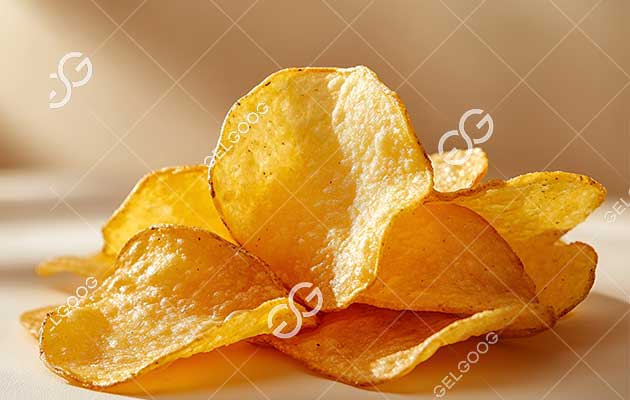
Key steps in potato chip production:
1. Potato reception and washing
Upon arrival at the factory, fresh potatoes undergo an initial inspection to remove tubers that are rotten, severely damaged, or otherwise unsuitable for processing. Acceptable potatoes then enter the washing equipment, where water flow, rotating drums, or brushes are used to remove surface soil, grit, and other impurities.
2. Peeling
In industrial production, methods such as mechanical peeling can be used to rapidly remove the outer skin, resulting in a cleaner potato surface and preparing the potatoes for subsequent slicing. During the peeling process, the intensity of the treatment must be controlled to ensure effective skin removal while minimizing the loss of edible flesh, thereby maximizing raw material utilization.
3. Slicing
After peeling, the potatoes enter an automatic slicing machine, where they are continuously cut into thin slices of uniform thickness. The slice thickness directly affects the final texture, frying time, and oil content of the potato chips.
4. Rinsing and Starch Treatment
After slicing, a certain amount of free starch typically adheres to the surface of the potato slices, requiring treatment via rinsing equipment. This step reduces surface starch and minimizes the likelihood of the slices sticking together, while also helping to improve their color and appearance after subsequent frying.
5. Blanching
The rinsed potato slices enter the blanching equipment for a brief heat treatment. Blanching improves the processing characteristics of the potato slices and helps control certain factors that affect the color and quality of the finished product. Blanching temperature and duration must be adjusted based on the potato variety, slice thickness, and product specifications; fixed parameters should not be applied indiscriminately.
6. Dewatering
After blanching, the surface of the potato slices retains a significant amount of moisture; they must pass through dewatering equipment to reduce surface moisture before entering the frying stage. The effectiveness of the dewatering process impacts stability during frying.
7. Continuous Frying
Frying is the critical step in developing the crispy texture and distinctive flavor of potato chips. After dehydration, the potato chips continuously enter the fryer, where they are fried at a controlled temperature and duration; this process gradually reduces internal moisture while creating the desired texture and color.
8. De-oiling and Cooling
After frying, the potato chips must pass through de-oiling equipment to remove excess oil. Proper de-oiling improves the mouthfeel of the chips and helps control the oil content of the final product.
9. Seasoning and Packaging
After cooling, the potato chips enter an automatic seasoning machine, where salt, spices, or other seasoning powders are added according to the product formula. The seasoning equipment ensures even distribution of the seasoning across the chip surfaces through drum rotation or continuous conveying. The chips then proceed to the automatic packaging stage. The packaging equipment measures the product to a preset weight and automatically performs bag forming, filling, sealing, and cutting operations.
The entire production process—from the arrival of raw materials at the factory to the final packaging of the potato chips—involves multiple processing stages, each with a distinct function. Relying solely on manual labor would not only require a large workforce but also make it difficult to maintain consistent production efficiency and product quality.
Consequently, modern food processing plants typically employ fully automatic potato chips production lines. These systems integrate equipment for washing, peeling, slicing, rinsing, blanching, dewatering, frying, de-oiling, seasoning, cooling, and packaging. Material transfer is handled continuously via conveyor systems, while automated control systems manage key processing parameters.
